

Skip to content

Project Experience

Transportation

Railways


About These Projects

Members of the firm are well experienced with the measurement of noise and vibration from heavy rail systems and the prediction of human and physical responses. Establishment of impact criteria and specification of performance levels are also integral to this body of experience. The following are selected examples of relevant project experience:

Common Acoustical Challenges:

  • Ground-borne vibration in nearby buildings
  • Wheel squeal and idling locomotives
  • Train whistling
  • Shunting yard noise
  • Increased rail traffic from expansions
  • New development next to rail lines

Deltaport Terminal Road & Rail Improvement Project

Delta, BC

Noise and vibration assessment of upgraded road and rail infrastructure for CEAA permit application. Included extensive noise and vibration monitoring (up to 14 days) at sensitive receptors and construction and operations noise and vibration prediction and effects assessments and participation in open house events.

South Shore Corridor Improvement Project

Vancouver, BC

Road and rail noise impact assessment at 100+ residences due to increased traffic with new overpass and track expansion, with baseline monitoring and Cadna/A modelling.

Low Level Road Project

North Vancouver, BC

Preliminary and detailed design environmental noise and vibration impact assessments and noise mitigation design for road and rail project. Included baseline monitoring, detailed Cadna/A computer modelling to assess impacts at 100+ residences and to design noise mitigation, and extensive public consultation.

Philip Avenue Overpass

North Vancouver, BC

Noise impact assessment for new overpass eliminating train whistling. Noise barrier design for shunting yard using Cadna/A and sound source height from Norsonic 848 Acoustic Camera system measurements.

Wall Street Residential Development

Vancouver, BC

Noise and vibration assessment for multiple iterations of proposed multi-family residential development adjacent to port road and rail infrastructure, including public meetings.

Gilwell Pointe Residential Development

Gilwell Pointe, Saskatchewan

Noise and vibration assessment for proposed multi-family development adjacent to rail line to meet CN project criteria. RAC/FCM Proximity Guidelines and Best Practices were used and site measurements were performed using our Soundbook multi-channel system.

Lakes District Secondary School Train Vibration Assessment

Burns Lake, BC

Vibration monitoring and assessment for new secondary school adjacent to busy railway line.

Train Engineer Whole Body Vibration Studies

BC

Monitoring of vibration in Canada Line and CN freight train, VIA Rail passenger train and CN yard locomotive to document and rate occupational whole body vibration levels.

Hampton Inn Road & Rail Noise Study

Langley, BC

Noise control assessment for noise problems in existing hotel.

CN Rail Main Line

Kamloops, BC

Design and execution of a major investigation of community complaints regarding building vibration and damage resulting from double-tracking of heavily used railroad through a residential area. The study included a social survey of the affected area, detailed vibration measurements throughout the community, and participation in public hearings.

Granville Square

Vancouver, BC

Analysis of effectiveness for train induced vibrations of elastomeric building vibration isolation system separating the railway from a high rise office tower with footings straddling the tracks.

Featured Case Study

Vancouver Fraser Port Authority Rail and Road Noise Mitigation Assessments

Vancouver Fraser Port Authority Rail and Road Noise Mitigation Assessments

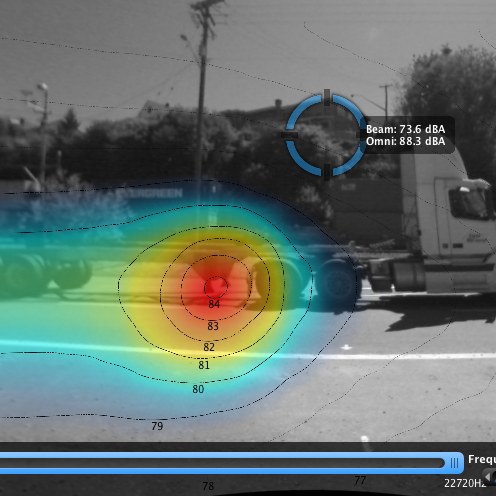
A port can be a noisy place: Ships come and go. Terminals bustle with activity. Trains and trucks arrive and depart, load and unload. At Port of Vancouver, Canada's largest, noise can occur at all hours. Even the wee ones. Aiming to limit port-related noise impacts on nearby communities, the Vancouver Fraser Port Authority has endeavoured, through its ongoing noise management programs, to identify the many noise sources connected to the Port and understand how that noise affects neighbouring homes and businesses. BKL has worked with the Port on several noise projects, including this detailed study of rail and road traffic noise sources, which started in September 2014. The Port asked BKL to monitor noise in the community and analyze results to distinguish between Port-related rail and road traffic and other noises. BKL conducted highly detailed two- to seven-day community noise studies to review a variety of different noise sources: rail passbys, rail squeals, train whistles, railcars shunting, locomotives idling, road traffic, trucks and trailers clanging, and other sources. BKL charted how each noise contributed to the overall noise environment during daytime, evening, and nighttime hours. In order to provide further detail, BKL undertook a controlled study of truck and trailer noise, taking measurements at different speeds and with different types of trailers to accurately assess the various sounds made by heavy truck passbys. For this component, BKL deployed an acoustic camera with an array of 256 microphones. Using the acoustic camera, BKL deconstructed the sounds of passing heavy trucks and quantified the contributions of discrete noise sources. Examples include engine and exhaust noises, the sound of tires rolling on pavement, and clanging parts on trailers. These results were visualized in the time domain using videos of sound contours overlaying the truck passby events. This data was worked into BKL's 3-D noise model, which the acoustical team used to explore potential noise control options and specifications for the different noise sources. Underpinning its analysis with the most detailed data possible, BKL developed specific mitigation options, including ballpark costs, for the noise sources assessed in the study: idling locomotives, rail whistles, railcars passing, squealing, and shunting. With the added information provided by the acoustic camera, BKL delivered pinpoint accurate data on noise from truck tires, engines, and exhausts, as well as trucks and trailers clanging. Of equivalent importance was how BKL communicated the results of its measurements and analysis. By using intuitive charts, images, and videos, BKL gave the Port a clear picture of how the various sources were contributing to community noise, and whether the different noise control measures being contemplated would be able to provide noticeable changes to noise levels. This eliminated the risk of spending money on measures that wouldn't benefit neighbouring communities. Have a project in mind? Get in touch today.