





Skip to content

Transportation

Moving communities forward

Why Acoustics Matter Here

Transportation infrastructure connects communities, but construction and increased traffic can also introduce noise and vibration concerns. Understanding these impacts early helps projects meet requirements, protect nearby homes and sensitive spaces, and develop effective solutions before issues arise.

  • Manage construction noise and vibration
  • Assess transportation noise and vibration impacts
  • Meet regulatory requirements
  • Protect nearby communities
  • Consider sensitive locations
  • Develop effective mitigation
  • Support informed project decisions
  • Communicate impacts clearly

Project Portfolio

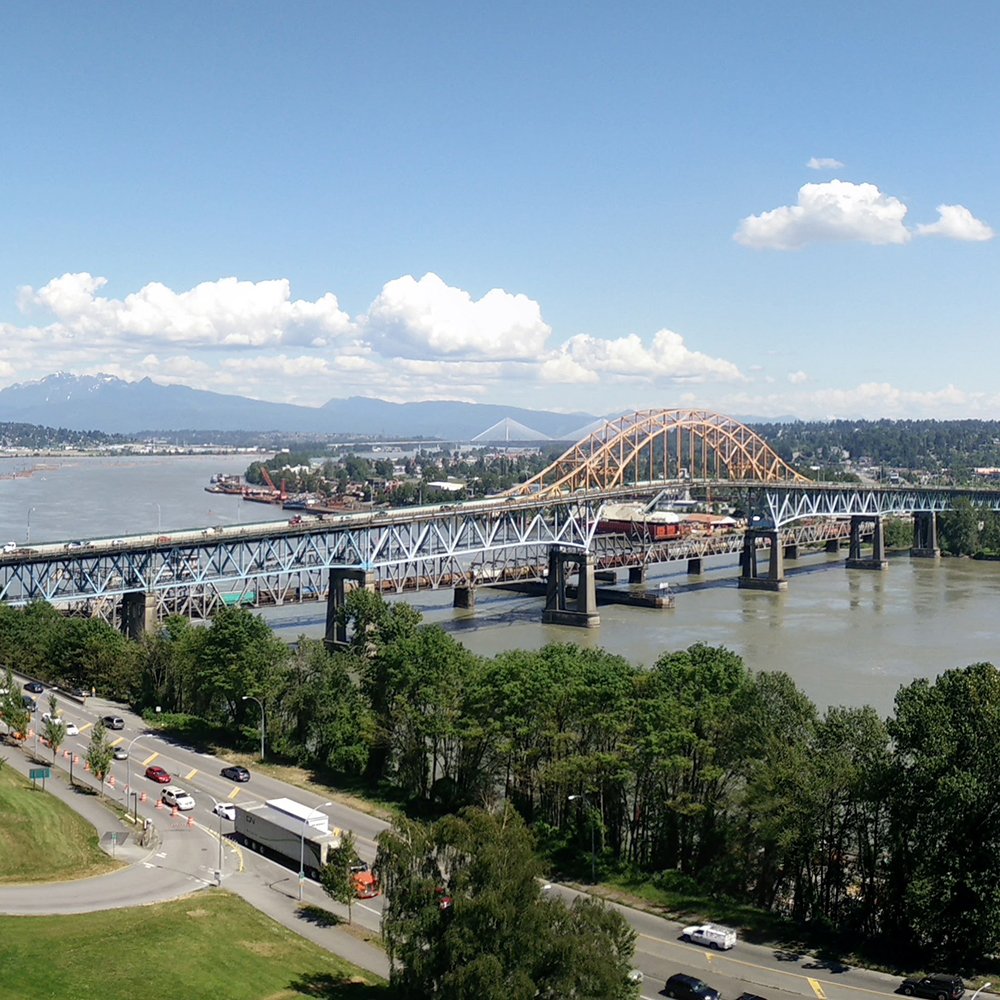
From highways and bridges to rapid transit and road-and-rail improvements, we have helped assess and manage noise and vibration impacts across several transportation projects in growing communities.

    View Portfolio

    The People Behind Our Work

    Meet Our Technical Leads

    • Mark Bliss
      Mark Bliss

      P.Eng., INCE

      President

      Mark Bliss

      Mark Bliss, P.Eng., INCE

      President

      Mark Bliss is a professional engineer and member of the Institute of Noise Control Engineering (INCE), with a bachelor’s degree in mechanical engineering from the University of British Columbia. He has practiced as an acoustical consultant since 2003.

      Mark specializes in environmental noise and vibration assessment, with extensive experience evaluating transportation, industrial, construction, entertainment, commercial and other noise impacts. He has worked with all levels of government on noise policy and planning, and has appeared as an expert witness before the British Columbia Supreme Court and at municipal council hearings.

      His work includes field measurement, noise modelling, mitigation assessment and detailed reporting, using national and international standards and specialized software such as Cadna/A. He has prepared Environmental Assessment Certificate applications to BCEAA, CEAA and IFC requirements, and has conducted third-party reviews and training in noise and vibration measurement and assessment.

      Mark also has extensive experience in building acoustics, working on new construction and renovations to address environmental and mechanical noise, improve speech intelligibility and room acoustics, and achieve effective airborne and impact sound isolation. His work draws on CSA, ISO, ASTM, ANSI, WHO, Health Canada and other recognized standards and guidelines.

    • Gary Mak
      Gary Mak

      P.Eng., PMP

      Technical Director, Environmental Noise and Vibration

      Gary Mak

      Gary Mak, P.Eng., PMP

      Technical Director, Environmental Noise and Vibration

      Gary Mak graduated from the University of British Columbia in 2011 with a bachelor’s degree in mechanical engineering and joined BKL the same year. Gary has since worked in the areas of environmental noise assessments, mechanical/industrial noise control, and architectural acoustics.

      Gary’s experience in architectural acoustics includes hospitals, educational facilities, performance spaces, offices, and operations buildings. His contributions to these projects include reviewing project acoustical requirements and building designs for partition sound isolation, room acoustics, mechanical noise control, and environmental noise control. For performance venues, Gary has experience working with more advanced techniques and parameters to assess and improve acoustical conditions for performers and audiences.

      Performing noise and vibration impact assessments for transportation, construction, industrial, and commercial projects, Gary has established baseline noise conditions, predicted future noise environments, rated noise impacts, and determined mitigation measures to meet project criteria. In particular, he has worked on mines, terminals, rail, transit centres, district energy centres, and other industrial and transportation projects.

      Gary is proficient in performing noise and vibration measurements with a variety of specialized equipment for investigations, bylaw assessments, room acoustics, and Sound Transmission Class (STC), and Impact Insulation Class (IIC) testing. He is also very familiar with using acoustical software including Cadna/A, Samurai, Insul, EASERA, and ODEON for impact analysis and design.

    • Brigette Martin
      Brigette Martin

      P.Eng., WELL AP

      Technical Director, Sound and Vibration Measurements

      Brigette Martin

      Brigette Martin, P.Eng., WELL AP

      Technical Director, Sound and Vibration Measurements

      Brigette Martin graduated from the University of Canterbury in New Zealand with a bachelor’s degree in mechanical engineering in 2009. Before joining BKL in 2015, Brigette worked as an acoustic consultant on various building and environmental projects throughout New Zealand and Australia.

      Brigette has extensive experience with environmental noise including assessing noise impacts and designing noise mitigation for gas compressor and pump stations, power generation sites, port terminals, and transformers sites; modelling construction noise, and developing construction noise abatement and management plans; designing noise controls and preparing noise management plans for mines and quarries; and monitoring benchmark noise, developing 3-D noise models, and designing noise walls for road infrastructure projects.

      In the area of building acoustics, Brigette has been involved in numerous projects and has consulted on sound insulation and mechanical services design, as well as controlling external noise intrusion and reverberation noise levels, and optimizing speech clarity for critical spaces.

      Over her career, Brigette has gained experience with a wide range of technical equipment and software including Insul, SoundPLAN, Cadna/A, SONarchitect, Brüel & Kjær analyzers, and numerous other sound level meters.

      Brigette has also developed and presented training courses for using acoustical software and sound level meters for acoustical engineers and clients throughout New Zealand and Australia.

    • Trevor Cheng
      Trevor Cheng

      P.Eng., MIOA

      Managing Specialist Acoustical Consultant

      Trevor Cheng

      Trevor Cheng, P.Eng., MIOA

      Managing Specialist Acoustical Consultant

      Trevor Cheng holds a bachelor of applied science (engineering physics) from University of British Columbia and joined BKL in January 2016, with experience in environmental and architectural acoustics, as well as condition monitoring, and machine vibration analysis and diagnostics.

      With BKL, Trevor has primarily been involved in transportation, commercial, industrial, and infrastructure projects. His work experience includes measuring baseline noise conditions, predicting future noise environments, assessing noise impact, and offering mitigation measures where appropriate.

      Trevor also has experience in architectural acoustics, working on hospitals, performance spaces, and multipurpose buildings. He is proficient in measuring noise insulation performance, reviewing building designs, and predicting noise levels from HVAC equipment.

      Prior to joining BKL, Trevor worked in London, UK, on a wide variety of projects ranging from large-scale architectural renovations to major airport improvement works. He has unique experience in measuring and assessing noise and vibration in buildings from underground rail sources.

      He also has experience using sound level meters by Brüel & Kjær, Norsonic, and Larson Davis, and software tools such as Cadna/A. He is familiar with ASTC/AIIC testing and using acoustic software including Insul, SONarchitect, and EASE for indoor noise predictions.

      Trevor is a member of the Institute of Acoustics (IOA) in the UK.

    Where We Can Help

    We measure noise and vibration, predict potential impacts, and develop practical mitigation strategies—from operational parameters and noise barriers to solutions tailored to each project’s unique requirements.

    • Environmental Noise and Vibration Assessments
    • Sound and Vibration Measurements
    • Sound and Vibration Predictions
    • Noise and Vibration Control
    • Acoustical Mitigation and Design
    • Stakeholder and Public Consultation

    In Practice

    Case Studies

    Discover how we have measured, predicted, and addressed noise and vibration impacts on major transportation projects, helping teams navigate technical requirements, mitigation, and community considerations.

    Hamilton Transit Centre

    Hamilton Transit Centre

    With the goal of swapping diesel-powered buses for more efficient vehicles that run on compressed natural gas (CNG), TransLink and Coast Mountain Bus Company began planning for a new facility that could handle CNG buses in 2009. The resulting Hamilton Transit Centre opened in 2016. It's TransLink's most energy efficient facility to date. The centre comprises eight buildings: a maintenance facility, operations centre, service delivery facility, washing facility, fueling depot, and wastewater treatment building. The entire facility supports the successful operation and maintenance of over 500 vehicles—all the buses serving Richmond, Burnaby, New Westminster, and Vancouver. For the comfort of the people who work at the Hamilton Transit Centre, TransLink chose a contemporary design with steel, recycled concrete, and much natural light and wood. With powerful exhaust systems in the maintenance facility and fuel depot, the centre has potential to emit a significant amount of mechanical system noise. The maintenance facility has 22 service bays, each with its own exhaust canopy, as well as a paint booth, parts washing area, and dust collection and make-up air systems. All this requires large ducts, which were built into the trusses to accommodate the vehicle lifts. BKL was hired by WSP to assess the noise impacts of the new transit centre, and began by conducting baseline noise monitoring at the site and measuring sound levels at other similar facilities. Since the centre would bring increased early-morning bus traffic into the neighbourhood, BKL carefully assessed how that traffic noise would affect the residents. BKL created a 3-D model to predict how noise from buses—when idling and driving—would travel through the neighbourhood, and based on its predictions, recommended idling limits and parking strategies to help mitigate the effects of bus noise on nearby homes. BKL's model also considered potential noise impacts from outdoor rooftop mechanical equipment and CNG compressors. BKL consulted on the buildings' interior and exterior acoustics. The team reviewed the drawings, evaluated the intended use of each space, and analyzed the sound isolation qualities of ceilings, walls, and windows, as well as the envelopes of each building. To optimize the acoustical environment for work activities, the acousticians identified areas that required upgraded acoustical treatments (such as ceiling tiles, window glazing, door seals, etc.) to limit reverberation and control sound transmission between spaces and from the exterior. In addition, BKL reviewed the mechanical systems and made recommendations for acoustical treatment to control background noise levels inside noise-sensitive rooms such as private offices, conference rooms, and quiet rooms. Download BKL's Hamilton Transit Centre project card pdf here. Have a project in mind? Get in touch today.
      Transportation and Infrastructure