
Skip to content

Case Study

Jansen Potash Mine

Year Completed

Under construction

Capital Cost

$7.5 billion

Total Size

2,100 hectares

About This Project

Near the shores of Jansen Lake, in a rural area 140 kilometres east of Saskatoon, a colossal underground potash mine is set to begin production in 2026. Known as the Jansen Project, the mine is owned by BHP and, when operational, will be the world’s largest potash mine, extracting from deposits almost 1 kilometre below the earth’s surface.

Scope of services

From 2010 to 2023, we supported the project’s environmental assessment process, providing noise prediction, impact assessment, and potential mitigation review services. This involved addressing both construction and operations noise levels for people living nearby, and identifying where noise mitigation would be necessary according to provincial guidelines.

In 2010, we built a 3-D computer model and used it to analyze a worst-case construction scenario and two operational noise scenarios. The model predictions revealed that some nearby residences, in both operations scenarios, would experience noise levels above those outlined in the criteria. Construction noise, however, did not exceed thresholds in the model.

We contributed to the project over the next 10 years, updating our model to account for changes to the mine’s operations plan. These updates included revising sound emission inputs for project noise sources (stacks, fans, mobile equipment, etc.) and analyzing more potential operations scenarios for BHP through the project’s lead consultant, ERM. In addition, we highlighted which residences experienced criteria-exceeding noise levels in the model.

Further updates to the model included new rail alignments, along with predictions about how train noise could affect nearby residents. These updates incorporated information about expected train size, speed, and frequency from the Jansen Project’s latest operations plan.

With every change, we calculated sound contours to make it easy to visualize how these changes would affect people living in the area. Notably, we assessed the potential for sleep disturbance from train noise. The predictions showed that, while the noise levels at some receivers would increase, no new receivers would experience criteria-exceeding noise. Our study also showed that one receiver that was over the threshold in the previous scenarios, would now fall under the threshold based on the realignment. In regard to nighttime train noise, the model showed that sleep disturbance due to rail noise would be unlikely.

Later updates for new operations stages and revised specs for noise sources and mitigation showed that project noise at receivers decreased from the 2010 iteration of the project. We noted the uncertainty of noise predictions for different types of sources.

Project benefits

By accurately assessing noise levels for the project’s construction and operations phases, and updating our acoustical model as the project design progressed, we supported this ambitious mining project, which, once operational, will have a lifespan of approximately 70 years.

We added our expertise to the project, and helped the project owner gain a clearer picture of how much noise the project will create, how that noise could affect people living in the area, and what feasible options were available to manage noise levels. With these insights, the owner was able to prepare a management plan and mitigation to minimize the potential impacts of project-related noise.

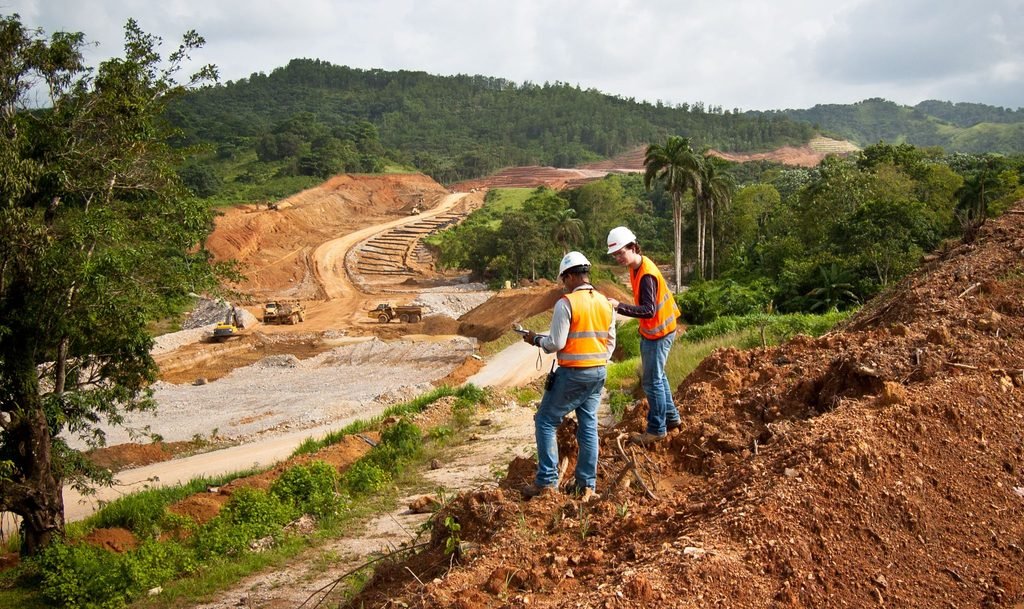
Photo by BHP

The People Behind Our Work

Our Technical Leads

  • Mark Bliss
    Mark Bliss

    P.Eng., INCE

    President

    Mark Bliss

    Mark Bliss, P.Eng., INCE

    President

    Mark Bliss is a professional engineer and member of the Institute of Noise Control Engineering (INCE), with a bachelor’s degree in mechanical engineering from the University of British Columbia. He has practiced as an acoustical consultant since 2003.

    Mark specializes in environmental noise and vibration assessment, with extensive experience evaluating transportation, industrial, construction, entertainment, commercial and other noise impacts. He has worked with all levels of government on noise policy and planning, and has appeared as an expert witness before the British Columbia Supreme Court and at municipal council hearings.

    His work includes field measurement, noise modelling, mitigation assessment and detailed reporting, using national and international standards and specialized software such as Cadna/A. He has prepared Environmental Assessment Certificate applications to BCEAA, CEAA and IFC requirements, and has conducted third-party reviews and training in noise and vibration measurement and assessment.

    Mark also has extensive experience in building acoustics, working on new construction and renovations to address environmental and mechanical noise, improve speech intelligibility and room acoustics, and achieve effective airborne and impact sound isolation. His work draws on CSA, ISO, ASTM, ANSI, WHO, Health Canada and other recognized standards and guidelines.

  • Gary Mak
    Gary Mak

    P.Eng., PMP

    Technical Director, Environmental Noise and Vibration

    Gary Mak

    Gary Mak, P.Eng., PMP

    Technical Director, Environmental Noise and Vibration

    Gary Mak graduated from the University of British Columbia in 2011 with a bachelor’s degree in mechanical engineering and joined BKL the same year. Gary has since worked in the areas of environmental noise assessments, mechanical/industrial noise control, and architectural acoustics.

    Gary’s experience in architectural acoustics includes hospitals, educational facilities, performance spaces, offices, and operations buildings. His contributions to these projects include reviewing project acoustical requirements and building designs for partition sound isolation, room acoustics, mechanical noise control, and environmental noise control. For performance venues, Gary has experience working with more advanced techniques and parameters to assess and improve acoustical conditions for performers and audiences.

    Performing noise and vibration impact assessments for transportation, construction, industrial, and commercial projects, Gary has established baseline noise conditions, predicted future noise environments, rated noise impacts, and determined mitigation measures to meet project criteria. In particular, he has worked on mines, terminals, rail, transit centres, district energy centres, and other industrial and transportation projects.

    Gary is proficient in performing noise and vibration measurements with a variety of specialized equipment for investigations, bylaw assessments, room acoustics, and Sound Transmission Class (STC), and Impact Insulation Class (IIC) testing. He is also very familiar with using acoustical software including Cadna/A, Samurai, Insul, EASERA, and ODEON for impact analysis and design.

  • Brigette Martin
    Brigette Martin

    P.Eng., WELL AP

    Technical Director, Sound and Vibration Measurements

    Brigette Martin

    Brigette Martin, P.Eng., WELL AP

    Technical Director, Sound and Vibration Measurements

    Brigette Martin graduated from the University of Canterbury in New Zealand with a bachelor’s degree in mechanical engineering in 2009. Before joining BKL in 2015, Brigette worked as an acoustic consultant on various building and environmental projects throughout New Zealand and Australia.

    Brigette has extensive experience with environmental noise including assessing noise impacts and designing noise mitigation for gas compressor and pump stations, power generation sites, port terminals, and transformers sites; modelling construction noise, and developing construction noise abatement and management plans; designing noise controls and preparing noise management plans for mines and quarries; and monitoring benchmark noise, developing 3-D noise models, and designing noise walls for road infrastructure projects.

    In the area of building acoustics, Brigette has been involved in numerous projects and has consulted on sound insulation and mechanical services design, as well as controlling external noise intrusion and reverberation noise levels, and optimizing speech clarity for critical spaces.

    Over her career, Brigette has gained experience with a wide range of technical equipment and software including Insul, SoundPLAN, Cadna/A, SONarchitect, Brüel & Kjær analyzers, and numerous other sound level meters.

    Brigette has also developed and presented training courses for using acoustical software and sound level meters for acoustical engineers and clients throughout New Zealand and Australia.

  • Trevor Cheng
    Trevor Cheng

    P.Eng., MIOA

    Managing Specialist Acoustical Consultant

    Trevor Cheng

    Trevor Cheng, P.Eng., MIOA

    Managing Specialist Acoustical Consultant
    Trevor Cheng holds a bachelor of applied science (engineering physics) from University of British Columbia and joined BKL in January 2016, with experience in environmental and architectural acoustics, as well as condition monitoring, and machine vibration analysis and diagnostics.

    With BKL, Trevor has primarily been involved in transportation, commercial, industrial, and infrastructure projects. His work experience includes measuring baseline noise conditions, predicting future noise environments, assessing noise impact, and offering mitigation measures where appropriate.

    Trevor also has experience in architectural acoustics, working on hospitals, performance spaces, and multipurpose buildings. He is proficient in measuring noise insulation performance, reviewing building designs, and predicting noise levels from HVAC equipment.

    Prior to joining BKL, Trevor worked in London, UK, on a wide variety of projects ranging from large-scale architectural renovations to major airport improvement works. He has unique experience in measuring and assessing noise and vibration in buildings from underground rail sources.

    He also has experience using sound level meters by Brüel & Kjær, Norsonic, and Larson Davis, and software tools such as Cadna/A. He is familiar with ASTC/AIIC testing and using acoustic software including Insul, SONarchitect, and EASE for indoor noise predictions.

    Trevor is a member of the Institute of Acoustics (IOA) in the UK.