
Skip to content

Case Study

UBC Campus Energy Centre

Year Completed

2016

Capital Cost

$24M

Total Size

21,528 sqft.
About This Project

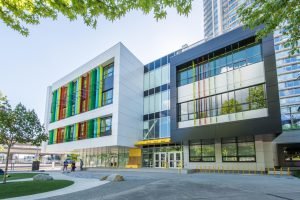
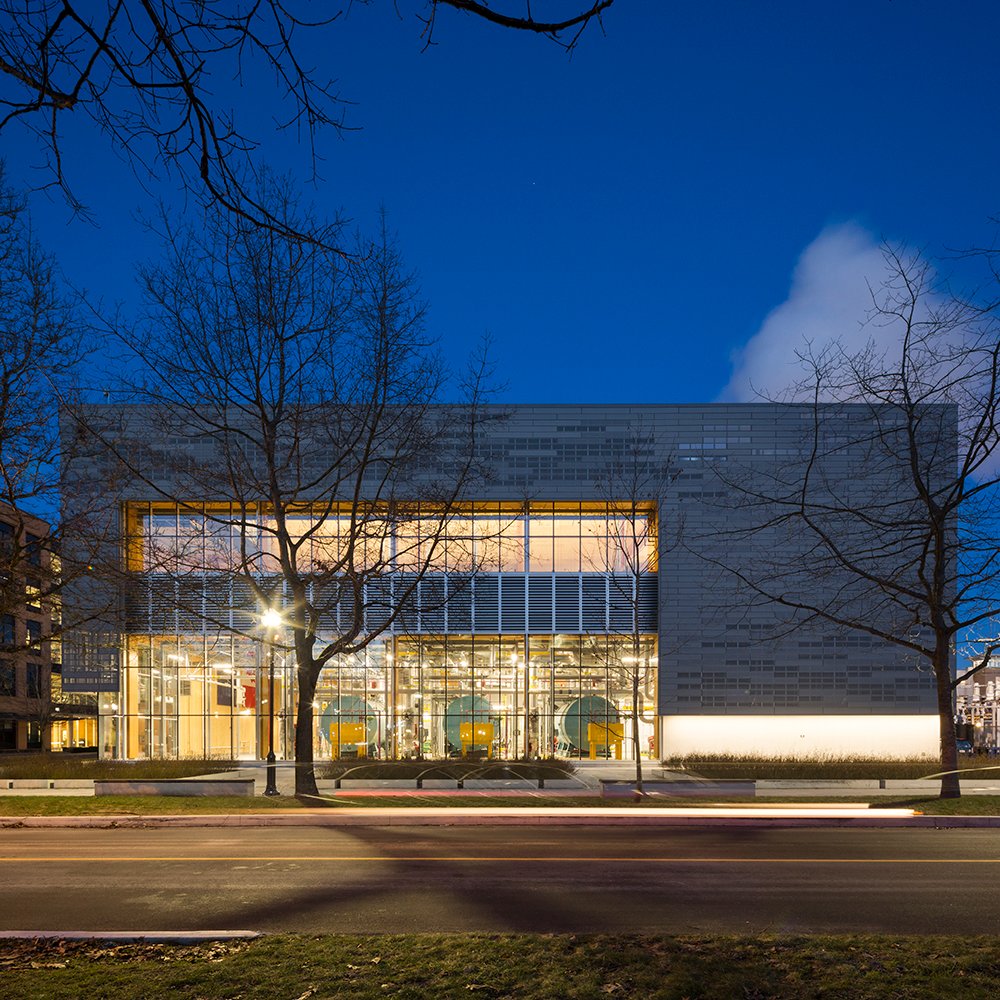
The heart of UBC’s district energy system, the Campus Energy Centre (CEC) features three 15 megawatt natural gas–fired high-efficiency boilers, with room for a fourth, and has the capacity to meet all of UBC’s heating requirements now and into the future. The facility has large windows and interactive signage so passerbys can learn about how energy is created on campus. In addition, the centre is made of cross-laminated timber (CLT), a renewable alternative to steel whose production demands less carbon.

The Campus Energy Centre is 24 percent more efficient than UBC’s old steam plant and will help reduce the campus’s overall carbon footprint.

Scope of services

Baseline noise and vibration monitoring

Before construction began, BKL predicted and assessed construction noise and vibration. To collect data on both baseline (pre-construction) and construction-related noise and vibration, the team took measurements at two nearby facilities: the Pharmaceutical Sciences Building and Life Sciences Centre, whose users, lab equipment, and specimens could be affected by noise and vibration. BKL conducted monitoring in a number of sensitive spaces at both locations to

  • establish the normal acceptable noise and vibration levels;
  • set criteria for the forthcoming project; and
  • determine whether specific construction activities were measurable or had the potential to exceed the criteria.

Baseline noise monitoring was also conducted around the future CEC site for the purpose of assessing future operational noise.

Excavation noise and vibration

With the baseline established and project criteria set, BKL conducted additional measurements during excavation and during a test-run of tamping to ensure these particularly-vibratory activities wouldn’t exceed project thresholds.

(Photo by Ema Peter)

While excavation didn’t cause any issues, BKL found that tamping caused excess vibration at two locations, including the electron microscopy lab, and recommended that construction planners communicate with lab managers to schedule future tamping activities. BKL also recommended adjusting the frequency of the vibration rollers to expand the acceptable threshold.

Operational noise and vibration

During design phase, BKL modelled noise levels generated from the future CEC and predicted the potential impact on adjacent noise-sensitive receivers. BKL reviewed the design and mechanical equipment selected and recommended mitigation measures necessary to reduce the noise emissions to acceptable levels.

After the CEC was up and running, BKL conducted attended noise and vibration monitoring in several offices and research labs, including rooms with a micro CT scan and electron microscope, to assess operational noise and vibration levels. BKL took measurements in each room, during start up and ramp up of a single boiler. After analyzing the data, BKL found that noise and vibration from the boiler met the established criteria—including manufacturer’s criteria for the micro CT scan and electron microscope, and there was no significant difference from baseline levels.

Project benefits

By assessing potentially noisy and vibratory construction activities, BKL ensured that operations at UBC Life Sciences Centre and Pharmaceutical Sciences Building remained as close to normal as possible. BKL identified and assessed potential issues, and when the issues had substance, as in the case of vibration from the tamping machine, BKL made recommendations to limit negative impacts.

BKL also recommended acoustic treatment and vibration isolation for CEC equipment and conducted post-construction measurements to confirm that operational noise and vibration levels inside the Pharmaceutical Sciences Building and Life Sciences Centre met the established criteria.

Select awards and certificates

  • LEED Gold certified
  • RAIC CaGBC Green Building Award of Excellence

The People Behind Our Work

Our Technical Leads

  • Mark Bliss
    Mark Bliss

    P.Eng., INCE

    President

    Mark Bliss

    Mark Bliss, P.Eng., INCE

    President

    Mark Bliss is a professional engineer and member of the Institute of Noise Control Engineering (INCE), with a bachelor’s degree in mechanical engineering from the University of British Columbia. He has practiced as an acoustical consultant since 2003.

    Mark specializes in environmental noise and vibration assessment, with extensive experience evaluating transportation, industrial, construction, entertainment, commercial and other noise impacts. He has worked with all levels of government on noise policy and planning, and has appeared as an expert witness before the British Columbia Supreme Court and at municipal council hearings.

    His work includes field measurement, noise modelling, mitigation assessment and detailed reporting, using national and international standards and specialized software such as Cadna/A. He has prepared Environmental Assessment Certificate applications to BCEAA, CEAA and IFC requirements, and has conducted third-party reviews and training in noise and vibration measurement and assessment.

    Mark also has extensive experience in building acoustics, working on new construction and renovations to address environmental and mechanical noise, improve speech intelligibility and room acoustics, and achieve effective airborne and impact sound isolation. His work draws on CSA, ISO, ASTM, ANSI, WHO, Health Canada and other recognized standards and guidelines.

  • Paul Marks
    Paul Marks

    M.Sc., MIOA

    Vice President, Project Delivery

    Paul Marks

    Paul Marks, M.Sc., MIOA

    Vice President, Project Delivery

    Paul Marks joined BKL in 2013. He is a full corporate member of the UK Institute of Acoustics and the Canadian Acoustical Association. He has over 20 years’ experience in the measurement, analysis, and assessment of noise, vibration, and acoustical matters and is a former member of the technical advisory team working with the UK government on noise and statutory nuisance issues. During this time, Paul has undertaken major projects within Europe, the Middle East, and Africa.

    He has experience in a wide range of multi-disciplinary environmental assessment projects including highway, rail, and air transportation infrastructure, mixed-use and brownfield regeneration schemes, renewable energy facilities, and power generation plants.

    Paul also has experience in a broad range of building and architectural noise assessment projects including the design of residential, office, educational, and commercial buildings. He has also undertaken acoustical studies for major infrastructure developments including work in the design of appropriate sound-fields for room-spaces in multi-occupancy buildings, including atriums and performance spaces. His work regularly involves close liaison with other acoustical engineers, planning consultants, architects, designers, and a variety of specialist environmental consultants.

    Paul is an experienced expert witness within the UK and has a broad experience of planning, licensing and statutory nuisance proceedings as well as being responsible for the successful design of a variety of impact mitigation measures including detailed engineering solutions, lay-out design, and administrative regimes where it has been necessary to closely liaise with clients, designers, and regulatory bodies in order to provide developments in accordance with sustainable principles.

  • Katrina Scherebnyj
    Katrina Scherebnyj

    M.A.Sc., P.Eng., MIOA

    Technical Director, Building Acoustics

    Katrina Scherebnyj

    Katrina Scherebnyj, M.A.Sc., P.Eng., MIOA

    Technical Director, Building Acoustics

    Katrina Scherebnyj started consulting in acoustics in 2007 in England and joined BKL in 2014. Her experience covers architectural acoustics, mechanical noise control, and environmental noise control, and she has worked on major projects in Canada, Europe, the Middle East, and Africa.

    In architectural acoustics, Katrina has worked on a range of new builds and refurbishment projects including schools, universities and higher education facilities, hospitals and healthcare facilities, performance spaces, cinemas, laboratories, office buildings, hotels, and residential buildings. She has provided acoustical design services in relation to sound insulation, room acoustics, and noise control.

    Katrina was a co-author of Music Accommodation in Secondary Schools: A Design Guide, published for the UK Department for Education in 2010. Researching the guide, she carried out acoustical measurements in the music departments of several schools and interviewed music teachers and students on the suitability of their music spaces.

    Katrina has extensive experience modelling internal sound fields and has carried out numerous models of performance spaces, lecture theatres, and other spaces where acoustical design is critical. She also has experience modelling outdoor noise propagation and has constructed and reviewed noise models for Columbia Containers in Vancouver, BC Children’s and Women’s Hospitals, the Pinnacle (once planned to be London’s tallest building), Crossrail, and other transportation projects.

    Katrina is a member of the Canadian Acoustical Association and the Institute of Acoustics (UK).

  • Gary Mak
    Gary Mak

    P.Eng., PMP

    Technical Director, Environmental Noise and Vibration

    Gary Mak

    Gary Mak, P.Eng., PMP

    Technical Director, Environmental Noise and Vibration

    Gary Mak graduated from the University of British Columbia in 2011 with a bachelor’s degree in mechanical engineering and joined BKL the same year. Gary has since worked in the areas of environmental noise assessments, mechanical/industrial noise control, and architectural acoustics.

    Gary’s experience in architectural acoustics includes hospitals, educational facilities, performance spaces, offices, and operations buildings. His contributions to these projects include reviewing project acoustical requirements and building designs for partition sound isolation, room acoustics, mechanical noise control, and environmental noise control. For performance venues, Gary has experience working with more advanced techniques and parameters to assess and improve acoustical conditions for performers and audiences.

    Performing noise and vibration impact assessments for transportation, construction, industrial, and commercial projects, Gary has established baseline noise conditions, predicted future noise environments, rated noise impacts, and determined mitigation measures to meet project criteria. In particular, he has worked on mines, terminals, rail, transit centres, district energy centres, and other industrial and transportation projects.

    Gary is proficient in performing noise and vibration measurements with a variety of specialized equipment for investigations, bylaw assessments, room acoustics, and Sound Transmission Class (STC), and Impact Insulation Class (IIC) testing. He is also very familiar with using acoustical software including Cadna/A, Samurai, Insul, EASERA, and ODEON for impact analysis and design.

  • Brigette Martin
    Brigette Martin

    P.Eng., WELL AP

    Technical Director, Sound and Vibration Measurements

    Brigette Martin

    Brigette Martin, P.Eng., WELL AP

    Technical Director, Sound and Vibration Measurements

    Brigette Martin graduated from the University of Canterbury in New Zealand with a bachelor’s degree in mechanical engineering in 2009. Before joining BKL in 2015, Brigette worked as an acoustic consultant on various building and environmental projects throughout New Zealand and Australia.

    Brigette has extensive experience with environmental noise including assessing noise impacts and designing noise mitigation for gas compressor and pump stations, power generation sites, port terminals, and transformers sites; modelling construction noise, and developing construction noise abatement and management plans; designing noise controls and preparing noise management plans for mines and quarries; and monitoring benchmark noise, developing 3-D noise models, and designing noise walls for road infrastructure projects.

    In the area of building acoustics, Brigette has been involved in numerous projects and has consulted on sound insulation and mechanical services design, as well as controlling external noise intrusion and reverberation noise levels, and optimizing speech clarity for critical spaces.

    Over her career, Brigette has gained experience with a wide range of technical equipment and software including Insul, SoundPLAN, Cadna/A, SONarchitect, Brüel & Kjær analyzers, and numerous other sound level meters.

    Brigette has also developed and presented training courses for using acoustical software and sound level meters for acoustical engineers and clients throughout New Zealand and Australia.

  • Trevor Cheng
    Trevor Cheng

    P.Eng., MIOA

    Managing Specialist Acoustical Consultant

    Trevor Cheng

    Trevor Cheng, P.Eng., MIOA

    Managing Specialist Acoustical Consultant

    Trevor Cheng holds a bachelor of applied science (engineering physics) from University of British Columbia and joined BKL in January 2016, with experience in environmental and architectural acoustics, as well as condition monitoring, and machine vibration analysis and diagnostics.

    With BKL, Trevor has primarily been involved in transportation, commercial, industrial, and infrastructure projects. His work experience includes measuring baseline noise conditions, predicting future noise environments, assessing noise impact, and offering mitigation measures where appropriate.

    Trevor also has experience in architectural acoustics, working on hospitals, performance spaces, and multipurpose buildings. He is proficient in measuring noise insulation performance, reviewing building designs, and predicting noise levels from HVAC equipment.

    Prior to joining BKL, Trevor worked in London, UK, on a wide variety of projects ranging from large-scale architectural renovations to major airport improvement works. He has unique experience in measuring and assessing noise and vibration in buildings from underground rail sources.

    He also has experience using sound level meters by Brüel & Kjær, Norsonic, and Larson Davis, and software tools such as Cadna/A. He is familiar with ASTC/AIIC testing and using acoustic software including Insul, SONarchitect, and EASE for indoor noise predictions.

    Trevor is a member of the Institute of Acoustics (IOA) in the UK.